


CROP SCHEDULE FOR TOMATO
| Sr. No. | Treatment / Application | Product | Dose /Acre | APPLICATION | Management |
|---|---|---|---|---|---|
| 1 | Vegetative – Dissolve in 20 to 200 ltr. of water as required for 1 acre of land and apply through Drip Irrigation or drench. | POORNIMA KIT | 1 KIT | Apply it in Week 2, 9, and 17. | It is a balanced form of nutrients that includes NPK, Zinc, Cropforce NP, Humigrow NP, and Mycorrhiza NP |
| 2 | Vegetative – Mix all with the required amount of water and apply through drip irrigation, flood irrigation, or drenching as per farmer’s availability. | NPK + Humigrow | 2 caps + 120gm | Apply it in Week 6 and 13. | It is a balanced form of Nutrition that includes NPK with Humic |
| 3 | Flowering – Mix both in 20 – 200 liters of water as per requirement and spray it on the plants. | ALP + Sonhabihan | 250gm + 250gm/200 lit. of water | Apply it in Week 10 and 18. | It is a Micronutrient and PGP that helps in Growth, Fruit set, and the quality of the produce. |
PEST ATTACKS, BACTERIAL, OR FUNGAL MANAGEMENT
| PEST / BACTERIAL / FUNGAL | IDENTIFICATION IN CROP | SYMPTOMS | SUGGESTED PRODUCT |
|---|---|---|---|
| Early Blight | 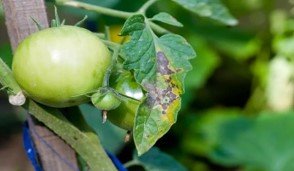 |
Dark spots with rings on lower leaves. | Indofa + Bacillus |
| Fusarium Wilt |  |
The entire plant wilts during the day and leaves yellow on one side plant. | Indofa + Lifeline + Bacillus |
| Powdery Mildew |  |
Light green or yellow spots on leaves turn dusty white. | Life-line + Indofa + BT |
| Anthracnose | 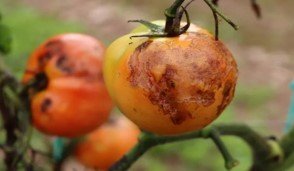 |
Small, sunken, water-soaked spots on ripening fruit. | Indofa |
| Septoria Leaf Spot |  |
Small, Brown, round spots on leaves. | Indofa |
| Botrytis | 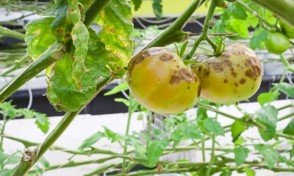 |
Gray-brown mold on leaves, stems, or fruit. | Indofa + Bacillus |
| Damping Off | 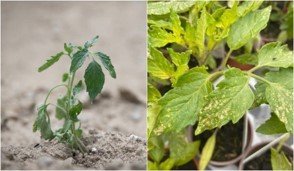 |
This is a most common seedling disease that affects the young seedlings at the base of the stem, near the soil line. | Indofa + Bacillus |
| Serpentine Leaf Miner | 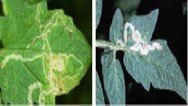 |
It is a pale yellowish fly, measuring 1.5 mm in length. The female fly punctures the upper surface of the leaf to lay eggs singly. The total life cycle takes 3 weeks. | Lifeline + Traps + Meta + BT |
| Gram pod borer | 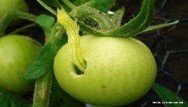 |
Young larva feeds on the leaves for some time and then attacks fruits. Internal tissues are eaten severely and completely hollowed out. | Meta + BT + Lifeline / Traps |
| Tobacco Caterpillar | 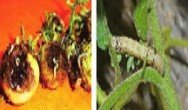 |
In the early stages, the caterpillars are gregarious and scrape the chlorophyll content of leaf lamina giving it a papery white appearance. | Lifeline + Traps + Meta + BT |
| Whitefly |  |
Chlorotic spots, Yellowing, Downward curling, and drying of leaves, Vector of tomato leaf curl disease. | Lifeline + Traps + Meta + BT |
| Spider Mites |  |
Affected leaves become reddish brown and bronzy, Leaves wither and dry, and flower and fruit formation is affected. | Lifeline + Traps + Meta + BT |
| Root-knot nematode | 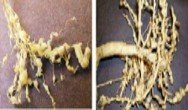 |
The formation of galls on the host root system is the primary symptom. | Meta + BT + Pacliq |
| Aphids |  |
Stunted Growth, Curled or yellow leaves, and Sticky honeydews. | Lifeline + Traps + Meta + BT |
| Thrips | 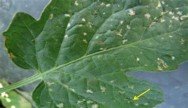 |
The thrips can cause tomato spotted wilt virus. | Lifeline + Traps + Meta + BT |
NUTRITION DEFICIENCY
| NUTRIENT | IDENTIFICATION | SYMPTOMS | SUGGESTED PRODUCT |
|---|---|---|---|
| Nitrogen | 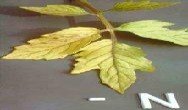 |
Under N deficiency, older leaves gradually change from green to paler green. As the deficiency progresses these older leaves become uniformly yellow. | Azoss Caps |
| Phosphorus | 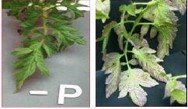 |
The symptoms first develop on older leaves showing some necrotic spots, and plants are dwarfed or stunted. Purpling of the stem, petiole, and undersides of the leaves. | PSB Plus Caps |
| Potassium |  |
Some of the young leaves show marginal necrosis (tip burn), and at a more advanced deficiency status show inter-veinal necrosis. | Potash Grow Caps |
| Sulfur | 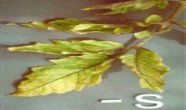 |
Leaves show general overall chlorosis. The veins and petioles show a very distinct reddish color. | Sulphur Caps |
| Manganese | 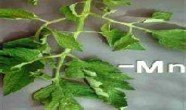 |
The leaves show light interveinal chlorosis developed under a limited supply of Mn. | Alp |
| Molybdenum | 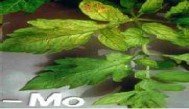 |
An early symptom is general overall chlorosis, similar to the symptom of N deficiency. | Alp |
| Zinc | 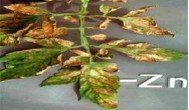 |
In the early stage, the younger leaves become yellow and pitting develops in the interveinal upper surfaces of the mature leaves. | Zinc Grow Caps |
| Boron |  |
These boron-deficient leaves show a light general chlorosis. | Alp |
| Copper | 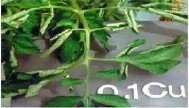 |
The leaves are curled, and their petioles bend downward. | Alp |
| Iron | 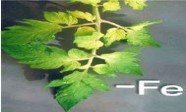 |
The iron-deficient leaves show strong chlorosis at the base of the leaves with some green netting. | Alp |
KEY FARMING POINTS
KEY FARMING POINTS
- SOIL TYPE = Well-drained, sandy, or red loam soils rich in organic matter with a pH range of 6.0-7.0 are considered ideal.
- SOIL PH = 2 to 6.8
- CLIMATE / TEMPERATURE = Tomato is a warm season crop. Best quality fruit is obtained at a temperature range of 21˚ to 24˚C.
- SEASON OF PLANTING = The best time to plant tomatoes in Southeast Asia depends on your location's climate. Aim for the cool dry season (November to March) for ideal temperatures, humidity, and reduced disease risk. You can also plant during the warm dry season (April-May or June-July) but choose heat-tolerant varieties and provide extra protection from the sun.
- SPACING = 5ft x 1ft
- MANURING & FERTILIZATION = Fertilizer requirements depend on the fertility or quality of the soil.
- WATER MANAGEMENT = Depends on the farmer’s practice.
- HARVESTING DURATION = Depends on the variety, on average harvesting starts in 55 - 60 days.
- YIELD = 30 – 40 tons (Depends on the variety).
NOTE:
- Recommended dosage on this crop schedule can vary depending on soil health, environmental conditions, and pest attacks.
- Add available forms of Phosphorus and Potash depending on the crop and crop varieties before every transplantation.
- Add available forms of calcium and magnesium as per the requirement.
- 1-acre POORNIMA KIT contains: -
- NPK caps = 2 caps
- Zinc caps = 1 cap
- Cropforce Nano Powder = 120gm
- Humigrow Nano Powder = 120 gm
- Mycorrhiza nano powder = 100 gm
PRECAUTIONS: -
- Biofertilizer is not a chemical fertilizer hence do not mix with agrochemicals.
- Do not be exposed to direct sunlight or heat.
- Use Bio-fertilizer before or after 3-4 days of use of chemical fertilizer.
- Please, clean the sprayer before the use of Bio-fertilizer or bio-pesticide.