


CROP SCHEDULE FOR CHILLI
| Sr. No. | Treatment / Application | Product | Dose /Acre | APPLICATION | Management |
|---|---|---|---|---|---|
| 1 | Vegetative – Dissolve in 20 to 200 ltr. of water as required for 1 acre of land and apply through Drip Irrigation or drench. | POORNIMA KIT | 1 KIT | Apply after transplantation that is week 1. | It is a balanced form of nutrients that includes NPK, Zinc, Cropforce NP, Humigrow NP, and Mycorrhiza NP |
| 2 | Vegetative – Mix all with the required amount of water and apply through drip irrigation, flood irrigation, or drenching as per farmer’s availability. | NPK + Humigrow | 2 Caps + 120gm | Apply it in week 5 and week 9. | It is a balanced form of Nutrition that includes NPK. |
| 3 | Flowering – Mix both in 20 – 200 litres of water as per requirement and spray it in the plants. | ALP + Sonhabihan | 250gm + 250gm/ 200 lit. of water | Apply it in week 10 (When flowerings are seen) | It is a Micronutrient and PGP that helps in Growth, Fruit set, and the quality of the produce. |
PEST ATTACKS, BACTERIAL, OR FUNGAL MANAGEMENT
| PEST / BACTERIAL / FUNGAL | IDENTIFICATION IN CROP | SYMPTOMS | SUGGESTED PRODUCT |
|---|---|---|---|
| Damping Off |  |
It is characterized by the development of disease after seedlings have emerged out of the soil but before stems are lignified. | RHIZO IMPACT + RHIZO BOOST |
| Die-back and Anthracnose (Fruit rot) |  |
Small, circular to irregular, brownish-black scattered spots appear on leaves. | RHIZO IMPACT + RHIZO BOOST |
| Choeanephora blight/ Wet rot |  |
Plants from seedling to early flowering stage are susceptible. | RHIZO - IMPACT + RHIZO – BOOST + Bacillus Subtilis + ZINC - TREAT |
| Powdery mildew | 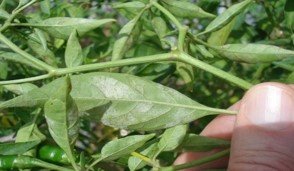 |
The white powdery coating appears mostly on the lower surface and occasionally on the upper surface. | ZINC LITE + RHIZO IMPACT + RHIZO GOLD + RHIZO BOOST |
| Cercospora Leaf spot |  |
Circular spots with brown margins and a grey centre appear on leaves. | RHIZO IMPACT + RHIZO BOOST |
| Bacterial Leaf spot |  |
Lesions on the leaf begin as circular. Spots become necrotic with brown centres with chlorotic borders. | RHIZO IMPACT + RHIZO BOOST |
| Alternaria Leaf spot |  |
The fungus attacks the foliage causing characteristic leaf spots and blight. Early blight is first observed on the plants as small, black lesions mostly on the older foliage. | RHIZO IMPACT + RHIZO BOOST |
| Fusarium Wilt | 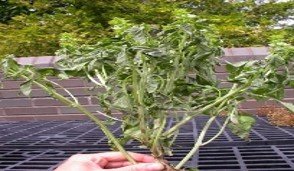 |
The first symptom of the disease is the clearing of the veinlets and chlorosis of the leaves. | RHIZO IMPACT + RHIZO BOOST + ZINC LITE |
| Pod Borer | 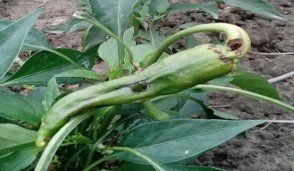 |
Internal tissues are eaten severely and completely hollowed out. While feeding the caterpillar thrust its head inside leaving the rest of the body outside. | MYCO MAX + ZINC TREAT + RHIZO GOLD |
| Tobacco Caterpillar | 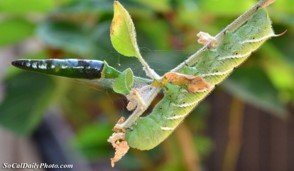 |
Pest breeds throughout the year, and Moths are active at night. Adults live for 7-10 days. | MYCO MAX + RHIZO GOLD |
| Spider Mites / Yellow mites |  |
The infected leaves develop crinkles and curl downwards. | MYCO MAX + ZINC TREAT + RHIZO GOLD + ZINC LITE |
| Root-knot nematodes | 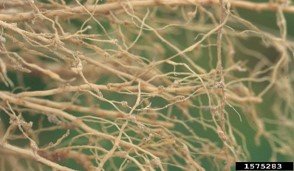 |
In infected plants in patches in the field, the Formation of galls on the host root system is the primary symptom. | MYCO MAX + RHIZO GOLD + ZINC SOIL |
| Thrips | 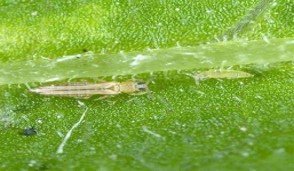 |
The infected leaves curl upward, crumble, and shed. | MYCO MAX + ZINC TREAT + RHIZO GOLD + ZINC LITE |
| Aphids | 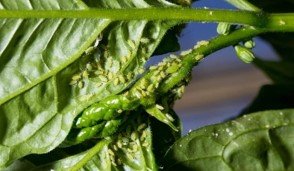 |
Appear on the tender shoots, leaves, and on the lower surface of the leaves. Suck the sap and reduce the vigour of the plant. | MYCO MAX + ZINC TREAT + RHIZO GOLD + ZINC LITE |
NUTRITION DEFICIENCY
| NUTRIENT | IDENTIFICATION | SYMPTOMS | SUGGESTED PRODUCT |
|---|---|---|---|
| Nitrogen |  |
The older and lower leaves on your plants will start to become yellow, wilt, and drop off. This is because the younger leaves higher up the plant will start to steal the nitrogen from these older leaves. | Azoss Caps |
| Phosphorus |  |
Dark green/purple leaves and Small leaf size | PSB Plus |
| Potash | 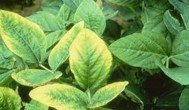 |
A potassium deficiency, on the other hand, results in deformed or drooping leaves, which later form brown margins and lead to cracks in the fruit skins. | Potash Grow |
| Iron | 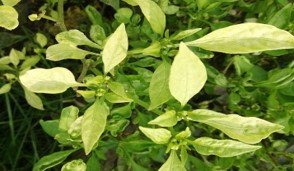 |
Poor seed germination, Reduced leaf colour, and Weakness or wilting | ALP |
| Boron | 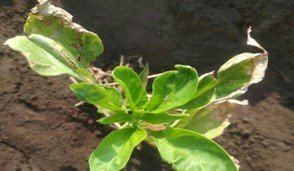 |
Slow plant growth, and Stunted vegetation | ALP |
| Manganese |  |
Slow plant growth, Stunted vegetation, and undeveloped root systems. | ALP |
| Zinc |  |
New leaves turn white, pale yellow, bronze, or yellow. Leaf tissues die due to chlorosis. Clustered leaves on the stems. Stunted growth, and Narrow leaves. | Zinc Grow Caps |
| Sulphur |  |
Light green colouration. More leaves change colour and the light green colour changes in places to deep yellow. | Sulphur Caps |
KEY FARMING POINTS
KEY FARMING POINTS
- SOIL TYPE = It can be grown in all types of soil, but sandy – loam, clay loam & and loamy soils are the best suited for chilli.
- SOIL PH = A pH range of 5.5 – 7 is best. Acidic soils are not suitable for chilli cultivation.
- CLIMATE / TEMPERATURE = It grows well in warm & humid climate and a temperature of 20˚ to 30˚C.
- SEASON OF PLANTING = Best time to plant is from 1st June to 30th Jully
- SPACING = 5ft x 1ft
- MANURING & FERTILIZATION = Fertilizer requirements depend on the fertility or quality of the soil.
- WATER MANAGEMENT = Depends on the farmer’s practice.
- HARVESTING DURATION = On average harvesting starts in 55 - 60 days.
- YIELD = The average capsicum yield per plant is 15 to 25 fruits. The average yield of capsicum under protected conditions may vary from 1-1.5kg/plant with a fruit number of 20-30/plant and fruit weight of 40-50g.
- Seed Treatment kit is optional.
- Bio-pesticides or Bio-fungicides can be applied on a preventive dosage or when any pest, fungal or bacterial diseases are identified.
- Recommended dosage on this crop schedule can vary depending on soil health, environmental conditions, and pest attacks.
- Add available forms of Phosphorus and Potash depending on the crop and crop varieties before every Transplantation.
- Add available forms of calcium and magnesium as per the requirement.
- 1-acre POORNIMA KIT contains: -
- NPK caps = 2 caps
- Zinc caps = 1 cap
- Cropforce Nano Powder = 120gm
- Humigrow Nano Powder = 120 gm
- Mycorrhiza nano powder = 100 gm
- Biofertilizer is not a chemical fertilizer hence do not mix with agrochemicals.
- Do not expose to direct sunlight or heat.
- Use Bio-fertilizer before or after 3-4 days of use of chemical fertilizer.
- Please, clean the sprayer before the use of Bio-fertilizer or bio-pesticide.