


CROP SCHEDULE FOR CABBAGE
| Sr. No. | Treatment / Application | Product | Dose /Acre | APPLICATION | Management |
|---|---|---|---|---|---|
| 1 | Vegetative – Dissolve in 20 to 200 ltr. of water as required for 1 acre of land and apply through Drip Irrigation or drench. | POORNIMA KIT | 1 KIT | Apply it in 1st, 5th & 9th month. | It is a balanced form of nutrients that includes NPK, Zinc, Cropforce NP, Humigrow NP, and Mycorrhiza NP |
| 2 | Vegetative – Mix all with the required amount of water and apply through drip irrigation, flood irrigation, or drenching as per farmer’s availability. | NPK + Humigrow | 2 Caps + 120gm | Apply it in 3rd, 7th & 11th month. | It is a balanced form of Nutrition that includes NPK. |
| 3 | Flowering – Mix both in 20 – 200 liters of water as per requirement and apply it in a soil. | ALP + Sonhabihan | 250gm + 250gm | Spray it during flowering period. | It is a Micronutrient and PGP that helps in Growth, Fruit set, and the quality of the produce. |
| 4 | Fruiting – Mix both in 20 – 200 liters of water as per requirement and apply it in a soil. | ALP + Sonhabihan | 500gm + 500gm | Apply it during fruiting stage. | It is a Micronutrient and PGP that helps in Growth, Fruit set, and the quality of the produce. |
NOTE: For any kind of Deficiency, Pest attacks, or Fungal or Bacterial diseases use the products as suggested.
PEST ATTACKS, BACTERIAL, OR FUNGAL MANAGEMENT
| PEST / BACTERIAL / FUNGAL | IDENTIFICATION IN CROP | SYMPTOMS | SUGGESTED PRODUCT |
|---|---|---|---|
| Brown spot |  | Spores can form a black thin mass covering the middle of the lesion, being more abundant on the abaxial surface. Abscission of the affected leaves occurs rapidly causing intense defoliation. | Indofa |
| Septoria Spot | 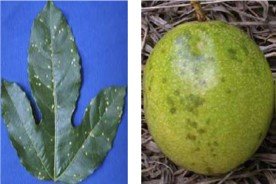 | Leaves are the most affected organs, showing light brown slightly round necrotic spots normally encircled by a chlorotic halo. | Indofa |
| Scab | 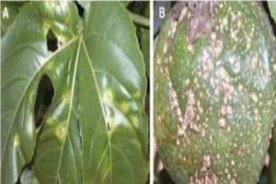 | Infected plants show small round spots on the leaves. Spots are initially translucent, and later become necrotic showing greenish-grey centers that correspond to fungal fructification. | Bacillus Subtilis + Bacillus |
| Fusarium Wilt | 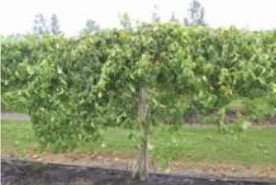 | The glossy green leaves of young passion fruit plants show a pale green color and mild dieback. A drop of lower leaves, general plant wilting, and sudden death take place as the disease progresses. | Indofa + Bacillus + Lifeline |
| Root & Crown Rot |  | Phytophthora root and crown rot disease affect both adults as well as nursery plants. Mild chlorosis is followed by wilting, defoliation, and death. Cortical tissues of the plants are exposed. | Indofa + Bacillus |
| Anthracnose | 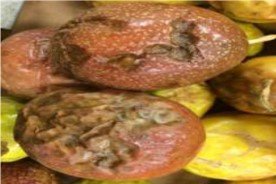 | Spots, initially 2-3 mm in diameter and oily in appearance, are produced on the leaf. They become dark brown, round, or irregularly shaped and 1 cm in diameter. The centers of spots become brittle and may break apart. | Indofa + Bacillus |
| Mites |  | Mites are scattered in reddish patches on the surface of the fruit, particularly around the stem end, along the midrib, and veins of the leaf, especially on the under-surface. | Lifeline + Traps + Meta + BT |
| Fruit Fly |  | The larvae damage the fruit by feeding on its pulp, contaminating it with bacteria and fungi, and causing premature fruit drop. The oriental, melon and Mediterranean fruit flies puncture the fruit while the rind is still tender. | Traps + Meta |
| Mealybugs |  | If a severe infestation occurs, loss of vigor, leaf drop, and fruit malformation may occur. Unchecked, an infestation may cause the death of the plant. | Traps + Meta |
| Aphid |  | Aphids cause malformation in foliage, and they are more important as disease vectors. Myzus persicae and A. gossypii transmit viral disease that causes the hardening of fruits. Myzus persicae and M. solanifolii are vectors of the passion fruit woodiness virus. | Lifeline + traps + Meta + BT |
PRECAUTIONS: -
- Biofertilizer is not a chemical fertilizer hence do not mix with agrochemicals.
- Do not expose to direct sunlight or heat.
- Use Bio-fertilizer before or after 3-4 days of use of chemical fertilizer.
- Please, clean the sprayer before the use of Bio-fertilizer or bio-pesticide.
NOTE:
- Recommended dosage on this crop schedule can vary depending on soil health, environmental conditions, and pest attacks.
- Add available forms of Phosphorus and Potash depending on the crop and crop varieties before every Transplantation.
- Add available forms of calcium and magnesium as per the requirement.
- 1-acre POORNIMA KIT contains: -
- NPK caps = 2 caps
- Zinc caps = 1 cap
- Cropforce Nano Powder = 120gm
- Humigrow Nano Powder = 120 gm
- Mycorrhiza nano powder = 100 gm
KEY FARMING POINTS
KEY FARMING POINTS
- SCIENTIFIC NAME = Passiflora edulis.
- SOIL TYPE = The best soil for growing passion fruit will have good drainage, good fertility and high organic matter content.
- SOIL pH = It should have a pH range of 5.5 to 6.5, which is slightly acidic.
- CLIMATE / TEMPERATURE = passion fruit prefers a tropical and sub-tropical climatewith moderate rainfall ranging between 100 and 250 cm. The ideal temperature is 20 °C to 30°C to get the best yield. However, some varieties can tolerate cooler or warmer temperatures.
- SPACING = The spacing for planting passion fruit depends on the variety and training system being followed.
- SEASON OF PLANTING = According to the search results, the best time to plant passion fruit depends on your climate. In frost-free climates, you can plant it anytime, but fall or spring are ideal. In cooler climates, wait until after the last frost in spring.
- MANURING & FERTILIZATION = Fertilizer requirements depend on the fertility or quality of the soil.
- WATER MANAGEMENT = Needs consistent moisture especially when flowering and fruiting. Avoid drowning the roots though! Monitor soil moisture regularly, aiming for moist but not soggy. Rainfall helps, but depending on your location, you might need extra watering during dry periods. Young plants might need daily sips, while established vines can wait 4-7 days between drinks. Mulch and drip irrigation can be your water-saving heroes!
- HARVESTING DURATION = After flowering, wait 70-80 days for fruits to mature. Look for color change and softening - they might even fall off naturally. The harvest is spread out over weeks, giving you delicious passion fruit for 2-3 months!
- YIELD = Young vines yield 5-15 pounds in their first year, but mature plantations can reach 2,200-4,400 pounds per acre (18,000-35,000 fruits). With ideal conditions, some farms report staggering yields exceeding 30,000 pounds per acre!
- LIFE-CYCLE = The lifecycle of passion fruit can be summarized in the following stages: choosing soil, container stage, soil preparation stage, planting stage, fertilizing stage, disease prevention stage, pruning stage and harvesting stage. Passion fruit is a perennial vine that can produce fruits for 3 to 4 years. It has a dominant diploid sporophyte phase in its life cycle. The flowers are pollinated by insects or wind and the fruits develop 70 to 80 days after pollination.
- NUTRITION CONTENT = Passion fruit is a nutritious fruit that provides fiber, vitamin C, vitamin A, iron, potassium, and other minerals and antioxidants.
- Calories: 17 in one fruit
- Fiber: 2g in one fruit
- Potassium: 821mg in one cup of passion fruit
- Passion fruit also has a low glycemic load, which means it does not spike your blood sugar levels.