


CROP SCHEDULE FOR CABBAGE
| Sr. No. | Treatment / Application | Product | Dose /Acre | APPLICATION | Management |
|---|---|---|---|---|---|
| 1 | Vegetative – Dissolve in 20 to 200 ltr. of water as required for 1 acre of land and apply through Drip Irrigation or drench. | POORNIMA KIT | 1 KIT | Apply it in the month of January, May & October. | It is a balanced form of nutrients that includes NPK, Zinc, Cropforce NP, Humigrow NP, and Mycorrhiza NP |
| 2 | Vegetative – Mix all with the required amount of water and apply through drip irrigation, flood irrigation, or drenching as per farmer’s availability. | NPK + Humigrow | 2caps + 120gm | Apply it in the month of March, August & November. | It is a balanced form of Nutrition that includes NPK with Humic |
| 3 | Flowering – Mix it in 200 liters of water and spray it in the plants. | ALP + Sonhabihan | 250gm + 250gm / 200 lit. of water | Apply it in the month of April & August | It is a Micronutrient and PGP that helps in Growth, Fruit set, and the quality of the produce. |
| 4 | Soil Treatment – Mix it in the required amount of water & drench it near the plant roots. | IBP Kit | 1 acre kit | Apply it in the month of January, May & September. | It helps to control Soil-borne diseases, fungal attacks & in nematode control. |
NOTE: For any kind of Deficiency, Pest attacks, or Fungal or Bacterial diseases use the products as suggested.
PEST ATTACKS, BACTERIAL, OR FUNGAL MANAGEMENT
| PEST / BACTERIAL / FUNGAL | DAMAGE SYMPTOMS IN CROP | SYMPTOMS | SUGGESTED PRODUCT |
|---|---|---|---|
| Blister blight |  |
Small, pinhole-size spots are initially seen on young leaves less than a month old. As the leaves develop, the spots become transparent, larger, and light brown. | Indofa + Bacillus |
| Red Rust |  |
Leaves develop lesions that are roughly circular, raised, and purple to reddish-brown. The alga may spread from leaves to branches and fruit. | Indofa |
| Brown Blight, Grey Blight | |
Small, oval, pale yellow-green spots first appear on young leaves. Often the spots are surrounded by a narrow, yellow zone. | Indofa |
| Twig Die Back, Stem Canker | 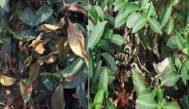 |
The first symptoms include browning and drooping of affected leaves. As the disease spreads into the shoots, they become dry and die. The entire branch can die from the tip downward. | Indofa + Bacillus |
| Red Root Rot Disease | 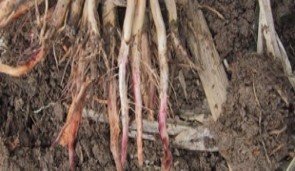 |
First symptoms appear as yellowing of the leaf followed by wilting and then the sudden death of the bush or entire bush with the weathered leaves attached to the stem for several days. | Indofa |
| Tea Mosquito Bug | 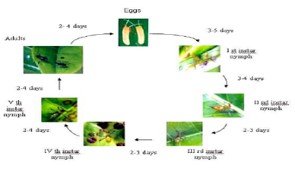 |
The nymphs and adults suck the sap of the young leaves, buds, and tender stems and while doing so, they inject toxic saliva which causes the breakdown of tissues around the site of feeding. | Traps |
| Thrips |  |
Feeds on tender above-ground parts, creating feeding scars, distortion of leaves, and discoloration of buds. | Lifeline + Traps + Meta + Pacliq |
| Leaf Eating Caterpillar |  |
In the early stages, the caterpillars are gregarious and scrape the chlorophyll content of leaf lamina giving it a papery white appearance. Later they become voracious feeders making irregular holes in the leaves. | BT |
| Jassid | 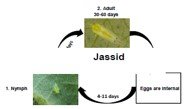 |
Both nymphs and adults suck the sap from the lower leaf surfaces through their piercing and sucking mouthparts. While sucking the plant sap, they also inject toxic saliva into the plant tissues, which leads to yellowing. | Lifeline |
| Aphids | 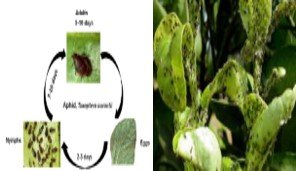 |
Nymphs and adults suck cell sap from the plant foliage. In addition, plants may become contaminated by honeydew produced by aphids and sooty mold growing on honeydew. | Lifeline + Traps + Meta + BT |
| Bunch Caterpillar | 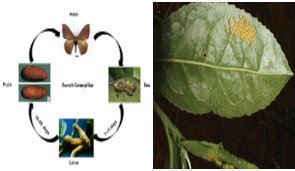 |
The damage is caused to the host plant by the caterpillars. The caterpillars eat the foliage of the host plant. Initially, they feed upon the surface tissues only but later on the whole blade is consumed. | BT |
| Red Spider Mite | 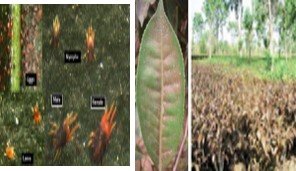 |
Spider mites usually extract the cell contents from the leaves using their long, needlelike mouthparts. this results in reduced chlorophyll content in the leaves, leading to the formation of white or yellow speckles on the leaves. | Lifeline + Traps + Meta + BT |
| Purple Mite | 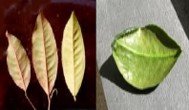 |
Damaged leaves are characterized by coppery brown discoloration; and the presence of numerous white cast skins of the mites along with the live mites; purple mites are prevalent on the undersurface of mature leaves. | BT + Bacillus |
| Yellow Mite | 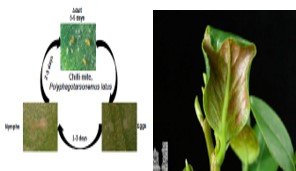 |
Mite is seen on young leaves especially the top two to three leaves and the bud. Affected leaves become rough and brittle and have corky lines. Downward curling and internodes get shortened. | Lifeline + Traps + Meta + BT |
| Scarlet Mite |  |
Symptoms of attack first appear on either side of the midrib and gradually spread to the entire leaf; feeding leads to brown discoloration of leaves and severe infestation leads to defoliation. | BT + Bacillus |
| Root Knot Nematode |  |
Infected plants in patches in the field. The formation of galls on the host root system is the primary symptom. | Meta + BT + Pacliq |
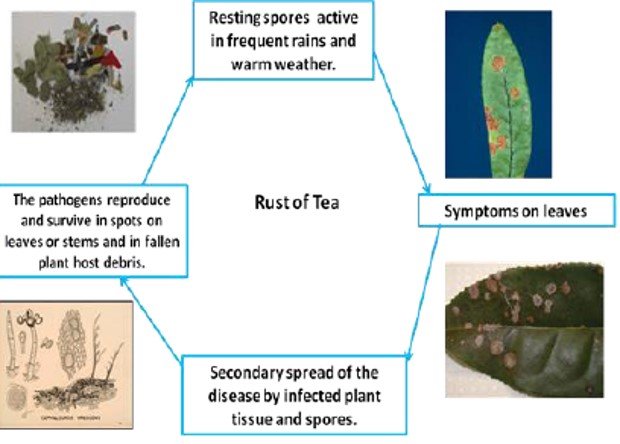
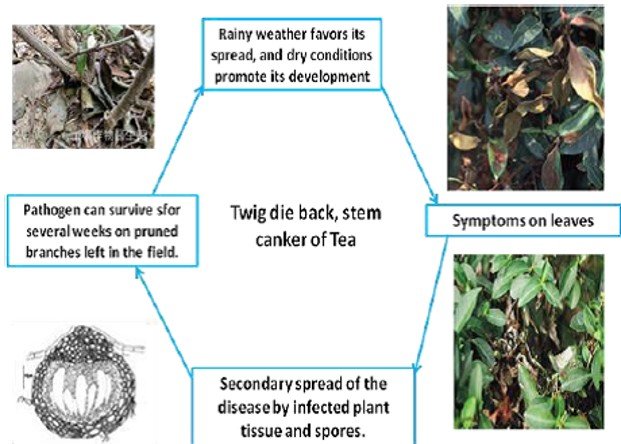
DISEASE CYCLE
| Blister Blight | Rust |
|---|---|
 |
 |
| Brown and Grey Blight | Twig Die Back, Stem Canker |
 |
 |
NUTRITION DEFICIENCY
| NUTRIENT | IDENTIFICATION | SYMPTOMS | SUGGESTED PRODUCT |
|---|---|---|---|
| Nitrogen |  | Yellowing of younger leaves. The leaves become rough, hard, and reduce in size. | Azoto caps |
| Potassium |  | Scorching due to chlorosis and necrosis occurs at the tip of the mature tea leaves and extends along the margin. Dominant purple/brown color and reduced leaf size are the common symptoms. | Potash grow caps |
| Sulphur |  | The characteristic symptom is 'Net veining' in the younger leaves where the leaf blade takes a striking yellow color and the veins down to the finest branching stand predominantly dark green. | Sulphur Grow Caps |
| Zinc |  | The plants show very short internodes, chlorotic and small sickle-shaped leaves, and stunted auxiliary shoots. | Zinc Grow caps |
PRECAUTIONS: -
- Biofertilizer is not a chemical fertilizer hence do not mix with agrochemicals.
- Do not expose to direct sunlight or heat.
- Use Bio-fertilizer before or after 3-4 days of use of chemical fertilizer.
- Please, clean the sprayer before the use of Bio-fertilizer or bio-pesticide.
KEY FARMING POINTS
KEY FARMING POINTS
- SOIL TYPE = Well-drained, acidic loam soil rich in organic matter. Tea plants do not tolerate waterlogged conditions.
- SOIL PH = Slightly acidic range of 4.5 to 6.5.
- CLIMATE / TEMPERATURE = They love moderate temperatures, ideally between 13°C to 28°C (55°F to 82°F), with some warmth (20-25°C or 68-77°F) for optimal growth. They can't handle frost or extreme heat though and prefer consistent rain throughout the year.
- SPACING = About 14000-16000 (up to 17000 in hilly areas) plants per hectare have been found to be an ideal bush population with a spacing of 105-110 cm between rows and 60-75 cm between plants. The planting can be done either as a single or double hedge.
- SEASON OF PLANTING = Tea planting can be done in April-June and September-October or October-November with adequate irrigation. Periods of heavy rains should be avoided.
- MANURING & FERTILIZATION = Tea needs essential fertilizers like N, P, K, S, Ca, Mg, Zn, Mn, B, and Cl like any other crop. The dosage of fertilizer application depends on many factors like the productivity of the part, the type of prune/skiff, the fertility status of the soil, etc.
- WATER MANAGEMENT = Water management is an important aspect of tea cultivation. Proper soil and water conservation measures are essential for organic tea cultivation.
- HARVESTING DURATION = The tea plant is harvested up to 4 times from April, all the way to November and the quality declines with each harvest. After the last tea harvest in November, the tea plant has all winter to build up nutrients and it releases those nutrients in the first sprouts of the springtime.
- YIELD = The average yield of tea crop is 17.9 quintals/hectare. Generally, in the tea industry, a field that yields up to 2000kg of made tea/ha is considered as low yielding 2000 to 3000kg as medium yielding, and anything above 3000kg as high yielding field.
- Recommended dosage on this crop schedule can vary depending on soil health, environmental conditions, and pest attacks.
- Add available forms of Phosphorus and Potash depending on the crop and crop varieties before every Transplantation.
- Add available forms of calcium and magnesium as per the requirement.
- 1-acre POORNIMA KIT contains: -
- NPK caps = 2 caps
- Zinc caps = 1 cap
- Cropforce Nano Powder = 120gm
- Humigrow Nano Powder = 120 gm
- Mycorrhiza nano powder = 100 gm