


CROP SCHEDULE FOR TOMATO
| Sr. No. | Treatment / Application | Product | Dose /Acre | APPLICATION | Management |
|---|---|---|---|---|---|
| 1 | Vegetative – Dissolve in 20 to 200 ltr. of water as required for 1 acre of land and apply through Drip Irrigation or drench. | POORNIMA KIT | 1 KIT | Apply it in week 1 that is after transplantation | It is a balanced form of nutrients that includes NPK, Zinc, Cropforce NP, Humigrow NP, and Mycorrhiza NP |
| 2 | Vegetative – Mix all with the required amount of water and apply through drip irrigation, flood irrigation, or drenching as per farmer’s availability. | Azoss + PSB + Potash Grow + Humigrow | 1 cap + 1 cap + 1 cap + 120gm | Apply it in Week 5, and Week 9. | It is a balanced form of Nutrition that includes NPK with Humic |
| 3 | Bulbing – Mix it in the required amount of water and apply it through Drip irrigation or Drench near the plants. | ALP + Sonha-Bihan | 500gm + 250gm | Apply it in Week 7 | It is a Micronutrient and PGP that helps in Growth, Fruit set, and the quality of the produce. |
PEST ATTACKS, BACTERIAL, OR FUNGAL MANAGEMENT
| PEST / BACTERIAL / FUNGAL | IDENTIFICATION IN CROP | SYMPTOMS | SUGGESTED PRODUCT |
|---|---|---|---|
| Thrips |  | Both adult and larval thrips feed within the mesophyll layer using a punch-and-suck motion. | Lifeline + Traps + Meta + BT |
| Mite | 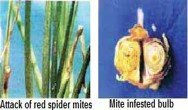 | Adults and nymphs feed primarily on the undersides of the leaves. The upper surface of the leaves becomes stippled with little dots that are the feeding punctures. | Lifeline + Traps + Meta + BT |
| Cutworm | 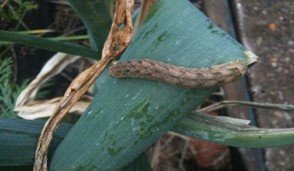 | Missing, cut, or wilted plants. Holes or cavities in leaves, fruits, or roots. | BT + Meta |
| Downy Mildew | 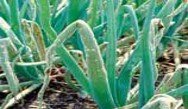 | Leaves turn pale green. On leaves, cottony white mycelial growth develops and appears white. Gradually the leaves turn pale yellow to dark brown and dry up. | Life-line + Indofa + BT + Bacillus |
| Fusarium Wilt |  | Initially yellowing of leaves and stunted growth of the plant is observed, which later on dry from tip to downwards. | Indofa + BT + Lifeline |
| Damping Off | 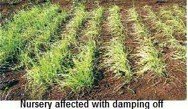 | Pre-emergence damping-off:This results in seed and seedling rot before they emerge out of the soil.Post-emergence damping-off:The pathogen attacks the collar region of seedlings on the surface of the soil. | Indofa + Bacillus |
| Purple Blotch | 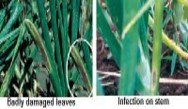 | The symptoms occur on leaves and flower stalks as small, sunken, whitish flecks with purple-colored centers. | Indofa + Bacillus |
| Leaf Blight | 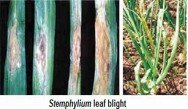 | Infection occurs on radial leaves of transplanted seedlings at the 3- 4 leaf stage during late March and early April. | Indofa + Bacillus |
| Anthracnose |  | The symptoms appear initially on the leaves as water-soaked pale yellow spots, which spread lengthwise covering the entire leaf blade. | Indofa |
| Aphid |  | Misshaped, curled, or yellow onion leaves. Sticky substance on the onion stem, Galls on the roots or leaves, and Small bugs on the opposite part of the leaf. | Lifeline + Traps + Meta + BT |
PRECAUTIONS: -
- Biofertilizer is not a chemical fertilizer hence do not mix with agrochemicals.
- Do not expose to direct sunlight or heat.
- Use Bio-fertilizer before or after 3-4 days of use of chemical fertilizer.
- Please, clean the sprayer before the use of Bio-fertilizer or bio-pesticide.
NUTRITION DEFICIENCY
| NUTRIENT | IDENTIFICATION | SYMPTOMS | SUGGESTED PRODUCT |
|---|---|---|---|
| Nitrogen | 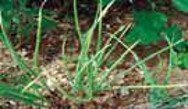 |
Leaves become yellowish green erect and upright curled, wilted, and dwarf. At maturity tissue above the bulbs become soft. | Azoss Caps/ Caps |
| Phosphorus | 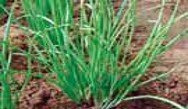 |
Slow growth, maturity blazed. Leaf color becomes light green and bulbs have few dried outer peals. Tip-burn in older leaves. | PSB Plus |
| Potash | 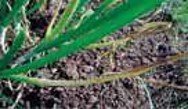 |
symptoms only develop on young leaves in the case of extreme deficiency. Tip burn symptoms, leaves become dark green and erect. Bolting promoted. | Potash Grow |
| Iron |  |
Complete yellowing of young leaves. Because iron has low mobility, iron deficiency symptoms appear first on the youngest leaves. | ALP |
| Manganese | 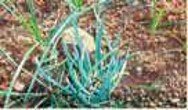 |
Leaves show tip burn, light colored and curling. Growth restricted. Bulbing delayed with thick necks. | ALP |
| Zinc | 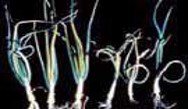 |
Growth restricted. The leaves show interveinal necrosis. | Zinc Grow Caps |
| Sulphur | 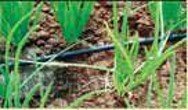 |
The leaves show general overall chlorosis. The yellowing is much more uniform over the entire plant including young leaves. | Sulphur Caps |
KEY FARMING POINTS
KEY FARMING POINTS
- SOIL TYPE = Onion can be grown in all types of soils, but the best soil is deep, friable loamwith good drainage, moisture-holding capacity, and organic matter.
- SOIL PH = The soil should have a pH between 6.0 and 7.0.
- CLIMATE / TEMPERATURE = Onion is a cool season crop that can be grown under a wide range of climatic conditions, but a mild climateis most suitable. Extremes of heat, cold, and rainfall are not good for onion growth. The best temperature range for onion is 13-25°C, with lower temperatures for vegetative growth and higher temperatures for bulb development. Onion also needs 70% humidity for good yield.
- SEASON OF PLANTING = The best time for planting onions depends on the variety and the climate of the region. Kharif onions are planted in June-July and harvested in October-November. Rabi onions are planted in October-November and harvested in March-April.
- SPACING = The spacing for onion transplantation depends on the size and variety of the onion, and the planting technique (seeds or seedlings). Generally, you should leave 4 to 5 inchesbetween each onion plant, and 12 to 16 inches between each row. Some giant onions may need more space. Plant onions so that no more than one inch of soil is placed above the seedlings.
- MANURING & FERTILIZATION = Fertilizer requirements depend on the fertility or quality of the soil.
- WATER MANAGEMENT = Water management is an important factor for onion crop growth and quality. Onions require about 30 inches of water per seasonwith drip irrigation. The water requirement varies depending on the agroclimatic, location, and season. Irrigation should be done at 7-10 days intervals depending on the soil condition and season. Water stress or excess can affect the bulb size, shape, and pungency.
- CROP DURATION = The crop duration of onion depends on the variety, climate, and cultivation method. Generally, onions take 80 to 150 daysto reach harvest from planting. Spring onions or green onions can be harvested in 35 to 45 days from sowing. In India, onions have two crop cycles, with the first harvesting from November to January and the second from January to May.
- YIELD = The yield of onion depends on the season, variety, and cultivation method. According to some sources, the average yield of onion is 10-20 tonnes per acre.
- Seed Treatment kit is optional.
- Bio-pesticides or Bio-fungicides can be applied on a preventive dosage or when any pest, fungal or bacterial diseases are identified.
- Recommended dosage on this crop schedule can vary depending on soil health, environmental conditions, and pest attacks.
- Add available forms of Phosphorus and Potash depending on the crop and crop varieties before every Transplantation.
- Add available forms of calcium and magnesium as per the requirement.
- 1-acre POORNIMA KIT contains: -
- NPK caps = 2 caps
- Zinc caps = 1 cap
- Cropforce Nano Powder = 120gm
- Humigrow Nano Powder = 120 gm
- Mycorrhiza nano powder = 100 gm