


CROP SCHEDULE FOR GROUNDNUTCROP
| Sr. No. | Treatment / Application | Product | Dose /Acre | APPLICATION | Management |
|---|---|---|---|---|---|
| 1 | Vegetative – Dissolve in 20 to 200 ltr. of water as required for 1 acre of land and apply through Drip Irrigation or drench. | POORNIMA KIT | 1 Kit + Rhizo caps | Apply after germination that is week 2 and week 9 | It is a balanced form of nutrients that includes NPK, Zinc, Cropforce NP, Humigrow NP, and Mycorrhiza NP |
| 2 | Vegetative – Mix all with the required amount of water and apply through drip irrigation, flood irrigation, or drenching as per farmer’s availability. | NPK + Rhizo caps + Humigrow | 1 Caps + 120gm | Apply it in week 6 and 10 | It is a balanced form of Nutrition that includes NPK. |
| 3 | Flowering/ Fruiting – Mix both in 20 – 200 liters of water as per requirement and spray it in the plants. | ALP + Sonhabihan | 250gm + 250gm/ 200 lit. of water | Apply it in week 6 (When flower bud are seen) and further more if required | It is a Micronutrient and PGP that helps in Growth, Fruit set, and the quality of the produce. |
| 4 | Vegetative and Flowering/ Fruiting – Mix all with the required amount of water and apply through foliar spray or drenching as per infestation of insect. | Amavasya kit | 2 kits | Apply it in week 4 | It is a balanced form of insecticides. Which include Traps, lifeline ,Bt,Acarida and Meta capsules. |
| 5 | Soil Treatment – Dissolve in 20lit. to 200lit. of water as per requirement for 1 acre of land and apply through drip irrigation or drench. | IBP KIT | 1 kit | Apply it before sowing | It prevents soil-born diseases and nematodes. Apply as per the soil health and soil-born diseases. |
PEST ATTACKS, BACTERIAL, OR FUNGAL MANAGEMENT
| PEST / BACTERIAL / FUNGAL | IDENTIFICATION IN CROP | SYMPTOMS | SUGGESTED PRODUCT |
|---|---|---|---|
| Stem fly | 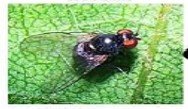 |
The maggots bore into the stem thereby causing withering and ultimate drying of the affected shoots, thus reducing the bearing capacity of the host plants.The adults also cause damage by puncturing the leaves, and the injured parts turn yellow. | Lifeline + Traps + Meta + BT |
| Pod borer | 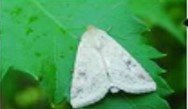 |
At early stage they feed on the foliage and sometime cause serious defoliation.During reproductive stage they bore the developing pod and feed on the seeds with its head typically thrust inside and most of the part of the body outside. | Lifeline + Traps + Meta + BT |
| Pea Weevil | 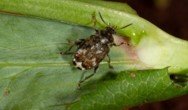 |
The larvae burrow straight through the pods to feed on the seed, so are not readily found for identification until seed is mature (above) and it is too late for control. | Traps+Meta + BT |
| Pea aphid |  |
Curling and distortion of leaves, stunting and malformation shoots occur.Leaves turn pale and dry. Honeydew secretion of aphids leads to sooty mould which hinders the photosynthetic activity of the plants. | Lifeline+Traps + Meta |
| Leaf miner |  |
The large number of tunnels made by the larvae between the lower and upper epidermis interferes with photosynthesis and proper growth of the plants, making them look unattractive. Leaves with serpentine mines Drying dropping of leaves in severe cases. | Lifeline+Traps + Meta |
| Pea pod borer | 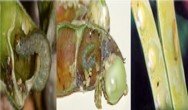 |
Dropping of flowers and young pods.As the larva develops within the pod, faeces accumulate causing soft, rotten patches on the pod.Seeds are either partially or entirely eaten, and considerable frass and silk are present. | Traps + Meta + BT |
| Downy mildew | 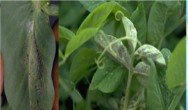 |
A grayish white, moldy growth appears on the lower leaf surface, and a yellowish area appears on the opposite side of the leaf.Infected leaves can turn yellow and die if weather is cool and damp.Stems may be distorted and stunted. Brown blotches appear on pods, and mold may grow inside pods. | INDOFA |
| Powdery mildew | 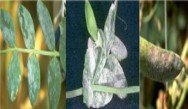 |
it attacks leaves first, producing faint, slightly discolored specks from which grayish white powdery growth of mycelium develop.Powdery growth spread over leaf, stem and pod.The leaves turn yellow and die.The fruits do not set or remain very small.It causes defoliation.Later stages, powdery growth also covers the pods. | INDOFA |
| Pea rust | 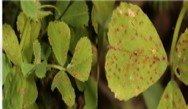 |
Leaves of infected plants exhibit many small, orange-brown pustules usually at the lower surface.Severely infected leaves wither and may drop from the plant. | INDOFA + Bacillus |
| Ascochyta blight | 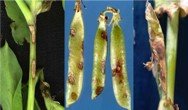 |
Symptoms first appear as small, purplish-brown and irregular flecks. Under continued humid conditions, the flecks enlarge and coalesce, resulting the lower leaves becoming completely blighted. | INDOFA + Bacillus |
| White rot | 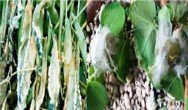 |
The maximum infection develops at the flowering stage of the crop, when petals fall on ground and these catch infection immediately and mycelial growth of fungus invades the stem and branche. | INDOFA + Bacillus |
NUTRIENTS DEFICIENCY
| NUTRIENT | IDENTIFICATION | SYMPTOMS | SUGGESTED PRODUCT |
|---|---|---|---|
| Nitrogen |  |
· Older growth is first and worst affected old leaves becoming yellow-mottled to marginally chlorotic. · As deficiency worsens plants becomes stunted and pale; older leaves become progressively pinkish pale and die, leaving green new growth. | Azoss Caps/ Azoto Caps |
| Phosphorus |  |
stunting, and darkening in colour of the whole plant. Reddening of stems, petioles, tendrils and leaf margins can occur, particularly if the plant is stressed. | PSB Plus |
| Potash | 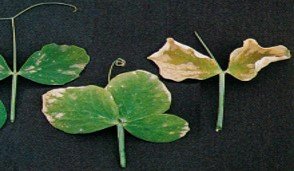 |
Pale grey necrosis of leaf veins (particularly the midrib) of the second oldest leaf. This is followed by older leaf pale to pink necrotic spots, that spread until the leaf shrivels and dies. | Potash Grow |
| Manganese | 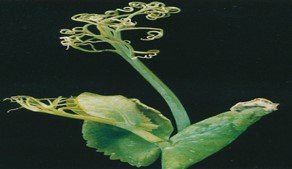 |
Affected leaves curl downwards along the length of the leaf . Interveinal leaf chlorosis turns into necrotic light brown spotting. Tendrils on new leaves have pale and excessively curled ends | ALP |
| Zinc |  |
The tissue between the veins of the leaves turns yellow or white while the veins remain green. This is often seen on the younger leaves of the plant. | Zinc Grow Caps |
KEY FARMING POINTS
KEY FARMING POINTS
- SOIL TYPE = Well drained loamy soil with optimum pH range of 6 - 7.5 .
- CLIMATE / TEMPERATURE = Peas favour a cool climate with an average temperature range of 10-18 C during its growth period.
- SEASON OF PLANTING = In India, the best season for Sowing of peas is during February - March and October - November in plains..
- SPACING = Sow the seeds at 45 x 10 cm in line
- MANURING & FERTILIZATION = Fertilizer requirements depend on the fertility or quality of the soil.
- WATER MANAGEMENT = The average crop water requirement for field pea was assessed to be 221.0 mm and further at different growth stages, the average crop water requirement has been estimated 20.0 mm (at initial stage), 52.0 mm (at crop development stage), 100.0 mm (at mid-season stage) and 49.0 mm (at late season stage).
- Harvesting = Harvest can be done on 75 days after sowing. High temperature during harvest affects the quality of peas.
- YIELD = 8 -12 t/ha of pods can be obtained depending on the variety .
- Seed Treatment kit is optional.
- Bio-pesticides or Bio-fungicides can be applied on a preventive dosage or when any pest, fungal or bacterial diseases are identified.
- Recommended dosage on this crop schedule can vary depending on soil health, environmental conditions, and pest attacks.
- 1-acre POORNIMA KIT contains: -
- NPK caps = 2 caps
- Zinc caps = 1 cap
- Cropforce Nano Powder = 120gm
- Humigrow Nano Powder = 120 gm
- Mycorrhiza nano powder = 100 gm
- Biofertilizer is not a chemical fertilizer hence do not mix with agrochemicals.
- Do not expose to direct sunlight or heat.
- Use Bio-fertilizer before or after 3-4 days of use of chemical fertilizer.
- Please, clean the sprayer before the use of Bio-fertilizer or bio-pesticide.